
Journal des Lycées > L'actualité des lycées
> Maine-et-Loire > Lycée Renaudeau-La Mode > Les articles > How do the local elections in Europe work ?
Lycée Renaudeau-La Mode, Cholet, le 31/03/2026.
How do the local elections in Europe work ?
European elections : a common framework, different national practices.
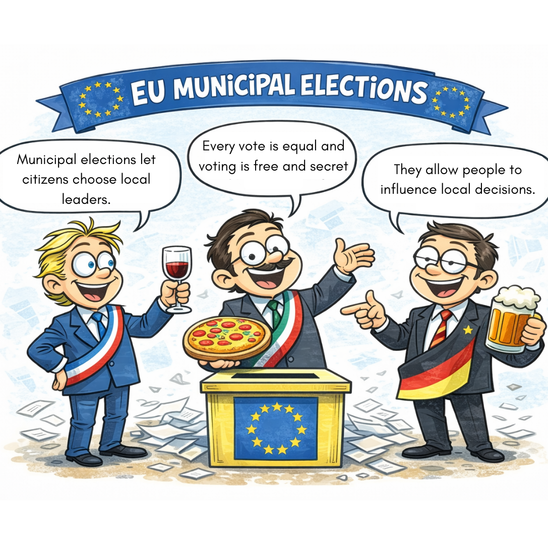

Today, democracy in Europe does not only exist at the national level. It is also very present in local communities where citizens can directly influence decisions that affect their daily lives. In the European Union, municipal elections allow people to choose their local representatives and participate in the management of their towns and cities.
Even citizens living in another EU country can vote and stand as candidates in municipal elections, which shows how the EU encourages political participation and integration.
Municipal elections therefore play an important role in European democratic life. While they are based on common democratic principles, they also show important differences between countries in the way local power is organised.
Democratic Principles Across the European Union, municipal councils are elected by direct, equal and secret universal suffrage, which guarantees that citizens can freely choose their representatives. This principle ensures that elections are fair and that the will of the people is respected.
In addition, the European Union protects the political rights of its citizens. Europeans who live in another EU country still have the right to vote and stand as candidates in municipal elections. This rule helps strengthen democracy at the local level and encourages the integration of citizens across the EU.
Importance of Municipal Elections Municipal elections are very important because they allow citizens to influence decisions that affect their everyday lives. Through these elections, people choose representatives who will make decisions about education, public transport, urban planning or environmental policies.
Even if each European country has its own political system, municipal elections are always based on the idea that citizens should have a voice in the management of their local communities.
Similarities in Europe Many European countries share similar democratic practices when it comes to municipal elections. In most EU member states, mayors and municipal councils are elected by universal suffrage, which allows citizens to directly participate in local democracy.
These elections usually take place every four to six years, and they are an important way to encourage civic participation. In addition, local issues such as climate change, housing or public services are becoming more and more important during municipal campaigns across Europe.
Local Organisation However, municipal elections are not organised exactly the same way in every European country. The way local power works often depends on each country’s political traditions and institutions.
For example, the method used to elect the mayor can be different from one country to another and the length of mandates may also change depending on the national system. The electoral rules used during elections can also vary and this influences how political parties are represented in municipal councils. In addition, municipalities do not always have the same responsibilities because their legal powers in areas such as social services or security depend on the national laws of each country.
Election of Mayors The way mayors are elected is not the same everywhere in Europe. In some countries, such as Germany or Italy, the mayor is often directly elected by the citizens, which leads to campaigns that focus strongly on the candidates themselves.
In other countries, like the Netherlands or in some Nordic states, the municipal council has a more important role. In these systems, the mayor may be chosen by councillors or sometimes appointed by the national government.
Electoral Systems Another difference between European countries concerns the electoral system used during municipal elections.
Many countries use proportional representation, which allows several political parties to be represented in the municipal council and often leads to coalition governments. In other countries, majority or mixed systems are used, which tend to favour larger political parties and create more stable majorities.
These systems influence how citizens’ votes are translated into political decisions at the local level.
Democratic Standards Even with these differences, all countries of the European Union must respect important democratic principles. These include transparency, equality and non-discrimination during elections.
These rules ensure that all citizens, including those who have moved to another EU country, can participate in local political life. Municipalities therefore become important places where European citizens can express their opinions and take part in democratic debates.
In conclusion, municipal elections are a key element of democracy in Europe. They allow citizens to participate directly in decisions that affect their local communities and daily lives. Even though each country organises these elections in its own way, they are all based on the same democratic values shared within the European Union.
By voting or even becoming candidates, citizens help shape the future of their towns and cities while also contributing to the democratic life of Europe.
Margaux Touzet, Apolline Merlet
Even citizens living in another EU country can vote and stand as candidates in municipal elections, which shows how the EU encourages political participation and integration.
Municipal elections therefore play an important role in European democratic life. While they are based on common democratic principles, they also show important differences between countries in the way local power is organised.
Democratic Principles Across the European Union, municipal councils are elected by direct, equal and secret universal suffrage, which guarantees that citizens can freely choose their representatives. This principle ensures that elections are fair and that the will of the people is respected.
In addition, the European Union protects the political rights of its citizens. Europeans who live in another EU country still have the right to vote and stand as candidates in municipal elections. This rule helps strengthen democracy at the local level and encourages the integration of citizens across the EU.
Importance of Municipal Elections Municipal elections are very important because they allow citizens to influence decisions that affect their everyday lives. Through these elections, people choose representatives who will make decisions about education, public transport, urban planning or environmental policies.
Even if each European country has its own political system, municipal elections are always based on the idea that citizens should have a voice in the management of their local communities.
Similarities in Europe Many European countries share similar democratic practices when it comes to municipal elections. In most EU member states, mayors and municipal councils are elected by universal suffrage, which allows citizens to directly participate in local democracy.
These elections usually take place every four to six years, and they are an important way to encourage civic participation. In addition, local issues such as climate change, housing or public services are becoming more and more important during municipal campaigns across Europe.
Local Organisation However, municipal elections are not organised exactly the same way in every European country. The way local power works often depends on each country’s political traditions and institutions.
For example, the method used to elect the mayor can be different from one country to another and the length of mandates may also change depending on the national system. The electoral rules used during elections can also vary and this influences how political parties are represented in municipal councils. In addition, municipalities do not always have the same responsibilities because their legal powers in areas such as social services or security depend on the national laws of each country.
Election of Mayors The way mayors are elected is not the same everywhere in Europe. In some countries, such as Germany or Italy, the mayor is often directly elected by the citizens, which leads to campaigns that focus strongly on the candidates themselves.
In other countries, like the Netherlands or in some Nordic states, the municipal council has a more important role. In these systems, the mayor may be chosen by councillors or sometimes appointed by the national government.
Electoral Systems Another difference between European countries concerns the electoral system used during municipal elections.
Many countries use proportional representation, which allows several political parties to be represented in the municipal council and often leads to coalition governments. In other countries, majority or mixed systems are used, which tend to favour larger political parties and create more stable majorities.
These systems influence how citizens’ votes are translated into political decisions at the local level.
Democratic Standards Even with these differences, all countries of the European Union must respect important democratic principles. These include transparency, equality and non-discrimination during elections.
These rules ensure that all citizens, including those who have moved to another EU country, can participate in local political life. Municipalities therefore become important places where European citizens can express their opinions and take part in democratic debates.
In conclusion, municipal elections are a key element of democracy in Europe. They allow citizens to participate directly in decisions that affect their local communities and daily lives. Even though each country organises these elections in its own way, they are all based on the same democratic values shared within the European Union.
By voting or even becoming candidates, citizens help shape the future of their towns and cities while also contributing to the democratic life of Europe.
Margaux Touzet, Apolline Merlet